
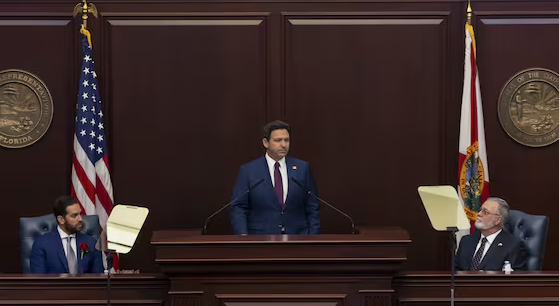
As the final legislative session under Governor Ron DeSantis approaches its conclusion, the atmosphere in the state capitol has become increasingly tense. Lawmakers, staff members, and political observers describe the closing weeks of the session as one defined more by frustration and partisan conflict than by cooperation.
For many within the Florida Legislature, the tone of the debates reflects years of political battles that have shaped the governor’s tenure. What once began as an aggressive policy agenda now appears to be ending with strained relationships between political allies and opponents alike.
A Session Dominated by Disputes
During the final stretch of the session in Florida, several policy debates stalled amid disagreements between lawmakers. Budget negotiations, education proposals, and regulatory reforms have all faced delays as factions within the legislature struggle to reach consensus.
One lawmaker summarized the mood bluntly, saying the session feels like “the last act of a whimpering story.” The comment reflects a growing perception that political fatigue and lingering disputes have overshadowed what many hoped would be a productive closing chapter.
Political analysts note that tensions between different branches of state leadership have become more visible in recent months. While DeSantis built much of his political identity on pushing bold reforms, the final session has exposed divisions even among members of his own party.
Policy Achievements and Controversies
Despite the friction, supporters of Governor DeSantis argue that his time in office has reshaped state policy in significant ways. His administration focused heavily on education reforms, business regulations, and cultural policy debates that placed Florida at the center of national political conversations.
However, critics argue that the confrontational style of governance also contributed to the current climate of discord. Several legislative initiatives proposed in this final session faced resistance, either from opposition lawmakers or from members of the governor’s own political coalition.
A Turning Point for Florida Politics
The end of this legislative session may signal more than just the conclusion of a policy cycle. It could mark a turning point in the political dynamics of the state.
Florida has increasingly become a major stage for national political battles, and the legacy of Governor DeSantis will likely continue to influence future debates within the state government. Whether supporters view his tenure as transformative or critics see it as divisive, the political impact is undeniable.
Looking Ahead
As the session concludes, attention is already shifting toward the next phase of leadership and policymaking in Florida. Lawmakers are expected to reassess priorities, rebuild alliances, and determine how the state moves forward after years of intense political conflict.
For now, however, the final days of the legislative session remain defined by the same tensions that have characterized much of the debate: competing visions, strong personalities, and a political environment where compromise has often proven difficult.
In the words of one veteran legislator, the session may be ending quietly—but the political consequences of these years will continue shaping Florida’s future for a long time.
Leave a Reply