
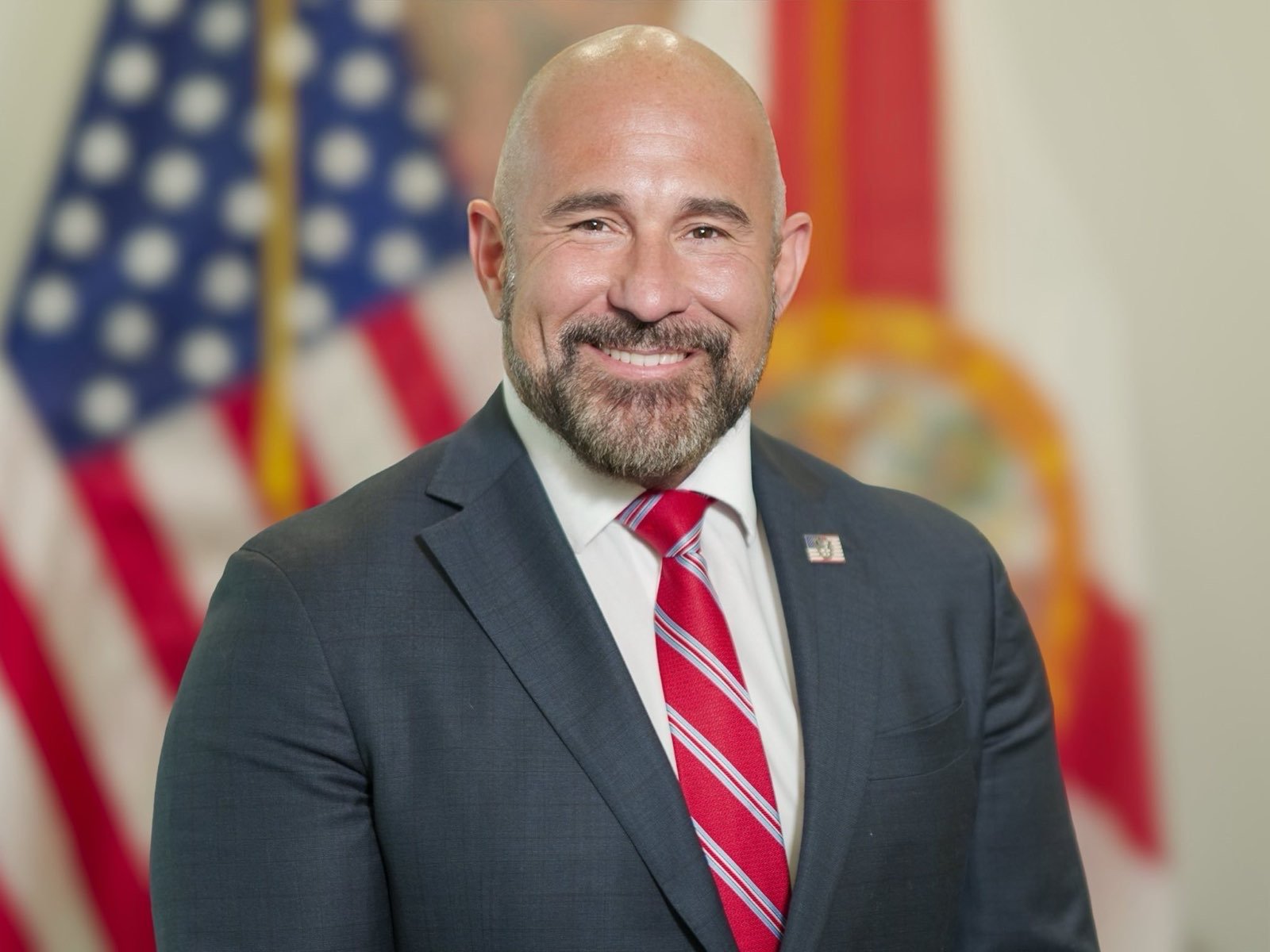
Background — who is Jay Collins
- Collins is a decorated former U.S. Army Special Forces soldier (Green Beret), wounded in combat and later amputee, who nevertheless served many years after and earned high military honors.
- After retirement, he entered politics: served in the state Senate (District 14) starting in 2022; he sponsored legislation and established a record on conservative priorities.
- On August 12, 2025, he was appointed by Ron DeSantis as the new Lieutenant Governor of Florida — a move widely interpreted as positioning him for higher office.
What he is doing now
- As lieutenant governor, Collins has signaled that he’s using the remainder of DeSantis’ term to push a conservative agenda: property-tax reform, support for law enforcement and first responders, immigration enforcement, and parts of prior health policies.
- At the same time, he is “testing the waters” for a 2026 run for governor. He has publicly acknowledged that he’s evaluating whether to enter the race, saying he’s “looking into it,” and that when he does make a decision, he wants to be fully committed: “if we jump in, we will be in it to win it.”
- He has begun building visibility: posting on social media with messages on what he thinks Florida needs in a governor; criticizing the likely frontrunner Byron Donalds for representing a “Fox News green-room” style of politics; and benefiting from a “dark money” group running supportive ads for him.
The strategic logic — why those moves matter
- Being lieutenant governor gives Collins a statewide platform and administrative visibility, which are helpful if he runs statewide. The timing — with DeSantis term-limited — is seen as a pathway for continuity within the current administration’s political legacy
- By aligning with DeSantis and projecting conservative, action-oriented leadership (“violence of action,” as he phrased it), Collins positions himself to appeal to the GOP base that supported DeSantis — yet he apparently aims to maintain independence, avoiding the trap of the race being cast purely as “DeSantis loyalist vs. Trump loyalist.”
- A major challenge: fundraising and donor support. Political analysts note he’s behind in money raised compared with frontrunners — which limits viability unless he secures significant backing soon.
Where things stand — decision impending
- As of now, Collins has not officially declared a gubernatorial campaign. He has described his internal deliberations as “coming to a decision in the next few weeks.”
- Observers indicate his hesitation could harm his chances: the longer he waits, the tighter the window to build a competitive campaign before the primary.
- Meanwhile, other potential and declared candidates are solidifying their ground — meaning that if Collins does enter, he’ll face formidable competition
What to watch next
- Whether Collins makes a formal campaign announcement — the “will-he/won’t-he” period is expected to end soon.
- How quickly he is able to raise significant funds and secure backing from major donors (or PACs), which will heavily influence his viability.
- Whether he obtains endorsement from DeSantis (or influential GOP figures), which could swing establishment support his way.
- How he distinguishes his platform from rivals — not only stylistically (law-and-order, veteran credentials) but programmatically (tax reform, conservative agenda, etc.).
Leave a Reply